The end of Poland's special economic zones (SEZs) falls on 31 December 2026 – on that date all zone permits expire, and with them the CIT or PIT exemption. We explain what this means for a company operating in a zone, what to do before year-end and how to keep benefiting from tax relief under the Polish Investment Zone.
Why special economic zones end in 2026
Special economic zones operated under an act of 1994. Their lifetime was extended several times, and the Council of Ministers finally set 31 December 2026 as the date on which the zones cease to operate. No new zone permits have been issued since 2018 – they were replaced by the Polish Investment Zone and the support decision.
Companies that obtained a permit earlier could use it until the zones close. In its 2026 reply to a parliamentary question, the Ministry of Development and Technology confirmed that on 31 December 2026 all permits to operate in the zones will expire and investors will lose the right to the income tax exemption (parliamentary question no. 16031 and reply, in Polish).
For many manufacturers this is a significant change. A plant built in a zone over a decade ago is still running and profitable, but from 2027 its income will be taxed under the general rules.
What happens to a zone permit after 31 December 2026
In practice, three things happen at the end of the year:
- the permit expires – no application or decision is needed, it happens by operation of law,
- exempt income stops arising – only income from zone activity earned up to 31 December 2026 can be exempt,
- the aid limit stops working – if the company has not used it up, the remainder is simply lost.
The expiry of the permit does not make everything connected with it disappear overnight. The exemption used so far was State aid, and State aid comes with conditions – including keeping the investment and jobs for a certain period. If the permit conditions were not met, the company may have to repay the exemption with interest. Before year-end it is therefore worth reviewing the permit once more and checking that all obligations were fulfilled on time.
Unused aid limit – can anything be saved?
This is the question most zone companies ask. A permit granted an exemption up to a set amount of aid, calculated from investment outlays or labour costs. Companies that had weaker years, high depreciation or losses often did not manage to use the full limit.
The Ministry openly acknowledged that not all entrepreneurs will be able to use their full aid by 31 December 2026. The current rules do not allow the unused limit to be carried forward to later years or transferred to a support decision. The only way to use more of it is to earn zone income in 2026 – within the normal, properly conducted business.
How to settle 2026 zone income
Income earned under the permit up to 31 December 2026 remains exempt, even if the company files its 2026 annual tax return in 2027. A few matters need attention:
- separating zone activity – revenue and costs of the activity covered by the permit must still be clearly separated from other activity until the end of 2026,
- non-calendar tax year – such companies should be particularly careful to determine which part of their income arose by 31 December 2026 and which later,
- aid limit settlement – keep a solid calculation of how much aid was used over the whole permit period, as the tax office or the zone manager may ask for it,
- overlap with a support decision – if the company already holds a support decision for the same site, income from the two sources must be settled separately.
These issues are best discussed with your accountants before the year is closed, not when the return is being prepared.
Polish Investment Zone – moving from a zone permit to a support decision
The successor to the zones is the Polish Investment Zone. It offers a similar benefit – a CIT or PIT exemption up to the aid limit – but works on different rules. The key difference: a support decision covers only a new investment. A zone permit cannot be “converted” into a decision, and income from the existing plant does not qualify just because it operated in a zone.
A new investment may be, among other things:
- building a new plant,
- increasing the production capacity of an existing plant, e.g. a new hall and line,
- extending production to products the plant did not make before,
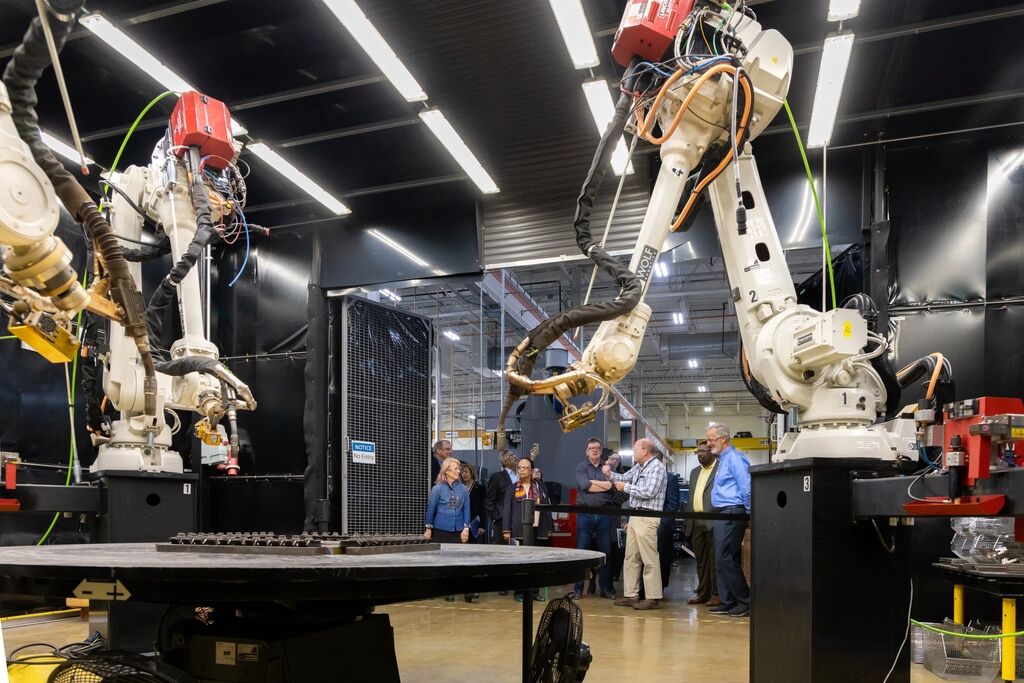
- a fundamental change in the production process, e.g. extensive automation.
The investment must meet the quantitative criterion (minimum eligible costs depending on the county and company size) and the qualitative criteria. Every support decision also requires creating at least one new job and maintaining it for the required period. We describe this in detail in the PIZ support decision step by step, and which expenses count in eligible costs in the PIZ.
Good news for zone companies: a support decision can also be obtained for expanding a plant that previously operated under a permit. The zone managers who issued permits also handle support decision applications, so the company usually deals with the same partner.
The most common mistake: starting before the application
Companies used to zone permits often plan an expansion “at leisure” and order machinery before thinking about a new decision. This is a mistake that can rule out support. The support decision application must be filed before works start – and the first binding order for equipment or the start of construction works already counts as the start.
So if the plant is planning investments for 2027, now is a good time to prepare the application. What you may and may not do before applying is explained in when not to start your investment.
Estonian CIT, a grant or a new decision – what to choose after 2026
The end of the permit opens new options for some companies. The rules on the Estonian CIT (Poland's distributed-profits tax) exclude companies earning income exempt under a zone permit or a support decision. A company whose permit has expired and which has no support decision may therefore consider the Estonian CIT from 2027 – provided it meets the other conditions of that regime.
The benefits must be compared, though. An exemption in the Polish Investment Zone means that tax is not paid at all up to the limit. The Estonian CIT generally defers tax until profit is distributed. For a company planning major investments, a new support decision is often more advantageous. For a company with no expansion plans, the Estonian CIT may be more attractive. A third route is EU grants and loans – compared with the PIZ in PIZ or grant.
Legal changes from 2027
In parallel with the zones winding down, Parliament worked on an amendment to the Act on supporting new investments. The act was passed in October 2026 and sent to the President for signature on 28 October (legislative history, print no. 3160, in Polish). Its purpose is to adapt the Polish Investment Zone to the end of the zones. The changes are to cover, among other things, how exempt income is determined under support decisions issued after 31 December 2026.
Until the act is published in the Journal of Laws, it is better not to base decisions on details that may still change. We will describe them in our Guide once the new rules are promulgated.
Year-end 2026 checklist for zone companies
- Check how much of the permit's aid limit remains and how much you will realistically use for 2026.
- Make sure the permit conditions (outlays, employment, deadlines) have been met.
- Agree with your accountants how 2026 zone income will be settled.
- List investments planned for 2027–2028 and check whether they can obtain a support decision.
- Do not place binding orders for new machinery before filing the application.
- Compare a new support decision with the Estonian CIT and grants.
MSP Invest, based in Toruń, has been preparing support decision applications and working with the zones for years. If your company is coming to the end of its zone permit and considering another investment, book a free consultation – we will check whether the new investment can obtain support.
Frequently asked questions
Do I have to return a zone permit or apply to terminate it?
No. Permits to operate in special economic zones expire by operation of law when the zones cease to operate on 31 December 2026. No application is needed, but the company should take care of settling its 2026 income and the permit conditions.
Is the unused aid limit from a permit transferred to a support decision?
No. The current rules do not allow unused aid to be carried forward to later years or transferred to a support decision. A support decision is new, separate aid with its own limit, calculated from new investment costs or labour costs.
Will 2026 income be exempt if I file the return in 2027?
Yes. Income from zone activity earned up to 31 December 2026 can be exempt even if the annual return is filed in 2027. What matters is properly separating the revenue and costs of the activity covered by the permit.
Can a zone company obtain a support decision to expand its plant?
Yes, if the expansion is a new investment, e.g. it increases production capacity or introduces new products, and meets the quantitative and qualitative criteria. Every decision requires creating at least one new job, and the application must be filed before the investment starts.
Can I switch to the Estonian CIT after my permit expires?
Often yes, if the company has no support decision and meets the other Estonian CIT conditions. Before choosing, it is worth comparing it with a new support decision, because a PIZ exemption means tax is permanently not paid up to the limit.
This article is for information only and does not replace an individual analysis of your investment.
Is your company coming to the end of its zone permit? We will check free of charge whether your planned expansion can obtain a support decision and a new CIT/PIT exemption.
Free consultation+48 607 826 526