
The Polish Investment Zone vs Estonian CIT is a choice many manufacturing companies in Poland face when planning growth. Both promise lower tax, but they work in completely different ways: a support decision gives a permanent exemption, while Estonian CIT only postpones the tax. We compare them step by step and point out the traps that are rarely mentioned at the start.
Exemption vs deferral – the key difference
Business owners often put both solutions in the same “lower tax” box. That is a mistake that can be expensive.
A PIZ support decision is a tax exemption. Income from the new investment, earned at the location specified in the decision, is exempt from CIT (or from PIT for sole traders and partnerships) until the aid cap is used up or the decision expires. Tax the company did not pay does not come back later. The money saved can be spent on more machinery, used to repay a loan or paid out to shareholders.
Estonian CIT works the other way round. The company pays no tax while profit stays in the business, but the tax does not disappear – it waits. The lump-sum tax is due when profit is paid out to shareholders or used to cover old losses, when hidden profits or non-business expenses arise, and when the company leaves the regime – on all profit earned during that period and not yet distributed (Article 28m(1) of the Polish CIT Act, in Polish).
In other words: in the PIZ the company keeps the tax for good; under Estonian CIT it borrows the tax from the state interest-free but has to pay it back one day.
How Estonian CIT works in 2026
The lump-sum tax is 10% of the tax base for small taxpayers and start-ups and 20% for other companies (Article 28o of the CIT Act). A shareholder receiving a dividend pays PIT on it but may reduce it by part of the lump-sum tax paid by the company. The regime covers four consecutive years and is renewed automatically unless the company opts out.
Not every company can use it. Article 28j requires, among other things, that:
- the business is a limited liability company, joint-stock company, simple joint-stock company, limited partnership or limited joint-stock partnership whose shareholders are exclusively natural persons,
- the company holds no shares in other companies,
- it employs at least 3 full-time employees who are not shareholders (or incurs equivalent pay costs under other contracts),
- less than half of its revenue comes from so-called passive sources, such as interest, receivables or related-party transactions without added value.
If any of these conditions stops being met, the company loses the right to the regime and has to settle tax on the profits from that period.
How the Polish Investment Zone exemption works
A support decision is issued by the zone management company for a specific new investment: building a plant, extending it, a new production line, a new product or a fundamental change in the production process. The investment must meet the quantitative criterion (minimum eligible costs depending on the district and company size) and the qualitative criteria. Every decision requires the creation of at least one new job.
The size of the exemption is set by the aid cap: eligible costs multiplied by the maximum regional aid intensity. The exemption is available for 12, 14 or 15 years depending on the location (for applications filed from 2027 this period will be longer). How to calculate exempt income is explained in our article PIZ CIT exemption – how to calculate exempt income.
The PIZ sets no conditions as to who the shareholders are. A decision can be obtained by a company with a foreign shareholder, a member of a corporate group, a company holding shares in other companies, and also by a sole trader.
Comparison for a manufacturer – a simplified example
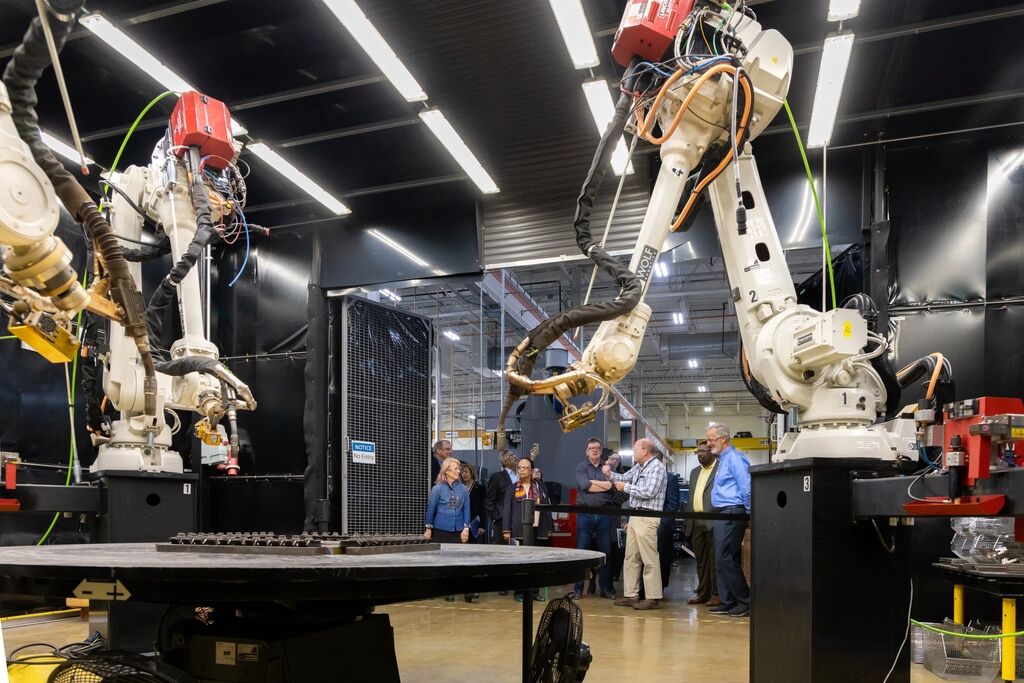
A metal components manufacturer plans a new hall with a cutting and welding line for PLN 6 million of eligible costs. It considers two routes.
In the PIZ, once the investment is completed, the company does not pay PLN 190,000 of CIT a year on income from the new line – until the cap is used up or the decision expires. This money never has to be paid back, and when shareholders take it out as a dividend, they pay only the usual PIT on dividends.
Under Estonian CIT the company also pays no tax while profit stays in the business. But every dividend payment, every hidden profit and leaving the regime trigger tax on that profit. The saving is shifted in time, not permanent.
The example ignores, among other things, discounting of the cap and the individual terms of the decision – actual amounts are calculated for a specific project.
To be fair, Estonian CIT covers the company's entire profit with no cap, while the PIZ applies only to income from the new investment and up to the cap. For a company planning a significant manufacturing investment and distributing part of its profit, however, the PIZ is usually clearly ahead: the exemption is permanent, does not require keeping money in the company and carries no hidden-profit risk.
Estonian CIT traps: hidden profits and non-business expenses
Estonian CIT has been in place since 2021 and still leads to disputes with the tax authorities. Most of them concern hidden profits – benefits for shareholders or their related parties that are not a formal dividend. Article 28m(3) of the Act lists, for example:
- a loan granted by the company to a shareholder or a related party,
- the excess of the market value of a related-party transaction over the agreed price,
- donations and gifts,
- entertainment expenses,
- remuneration paid to a shareholder in the part exceeding the statutory limit – it may be treated as a hidden profit.
Lump-sum tax on hidden profits is paid on an ongoing basis – by the 20th day of the month after the payment or benefit (Article 28t). Non-business expenses are taxed in the same way. In practice, situations that are common in family businesses – a car also used privately, renting property from a shareholder, a “short-term” loan – have to be constantly checked for tax.
The rules keep changing. In 2026 work is under way to tighten Estonian CIT, including a broader list of hidden profits, planned to apply from 2027. A company choosing the regime for years must accept that the rules may change along the way.
Entering and leaving the regime – the forgotten costs
Estonian CIT looks simple on entry, but its costs often become visible only on exit. When a company opts out or loses the right to the regime (e.g. when employment falls below the required level or a corporate shareholder joins), it has to settle tax on profit earned during the regime that has not yet been taxed. Re-entering the regime is only possible after several years.
The second issue is reliefs. A company under the lump-sum regime does not use the incentives of standard CIT – including the R&D relief, the robotisation relief and IP Box. For a modern manufacturer that automates production and develops its own products, this is a real loss.
Can the PIZ and Estonian CIT be combined?
Not at the same time. The lump-sum rules do not apply to taxpayers earning income exempt under a special economic zone permit or a support decision (Article 28k(1)(3) of the CIT Act). This is also confirmed by the Ministry of Finance's tax guide for investors (in Polish).
So the company has to choose. A company already under Estonian CIT that plans a large investment should calculate whether switching to a support decision pays off – and when to do it at the lowest cost, because leaving the regime means settling earlier profits. Companies whose special economic zone permit is ending (SEZs operate until 31 December 2026) often hear that Estonian CIT is the natural successor. It is worth checking first whether a new investment could qualify for another support decision – see our article End of SEZs in 2026 – what happens to zone permits.
When Estonian CIT can make sense
Estonian CIT can be a good fit for companies that do not plan a new investment eligible for the PIZ – e.g. those in activities excluded from aid (trade, construction), with a simple ownership structure, no transactions with shareholders and a policy of keeping all profit in the business for years. For a manufacturer investing in new capacity, the calculation usually favours the PIZ – and the exemption can be complemented with external funding, as we describe in PIZ or a grant – which to choose.
Choosing between the PIZ and Estonian CIT is a decision for many years, and mistakes – such as starting the investment too early, a badly planned exit from the regime or overlooked hidden profits – are hard to fix later. That is why both options should be calculated with an adviser before the first investment contract is signed.
Short answers to questions about combining the PIZ with Estonian CIT, hidden profits and taxation of dividends from exempt profit can be found in our FAQ – can the PIZ be combined with Estonian CIT.
MSP Invest from Toruń prepares applications for a support decision in the Polish Investment Zone. If you are wondering whether your investment qualifies for the PIZ and how much you would really gain compared with Estonian CIT, book a free consultation.
This article is for information only and does not replace an individual analysis of your investment.
Estonian CIT or a support decision? We will compare both options for your investment free of charge and check whether it qualifies for the PIZ.
Free consultation+48 607 826 526