The Polish Investment Zone (PIZ) vs the robotisation tax relief – a question every manufacturer planning to buy robots should ask. The relief lets you deduct half of robotisation costs from the tax base, while a support decision exempts from CIT or PIT the income from the whole new investment. We show which gives more, what changes from 2027 and when you can use both.
How the robotisation relief works
The robotisation relief (Article 38eb of the Polish CIT Act; for individuals in business, Article 52jb of the PIT Act) is an additional deduction. A company books robot spending as tax-deductible costs as usual and, on top of that, deducts from its tax base an amount equal to 50% of those costs. The benefit is the tax on that additional amount – at a 19% rate roughly 9.5% of robotisation spending.
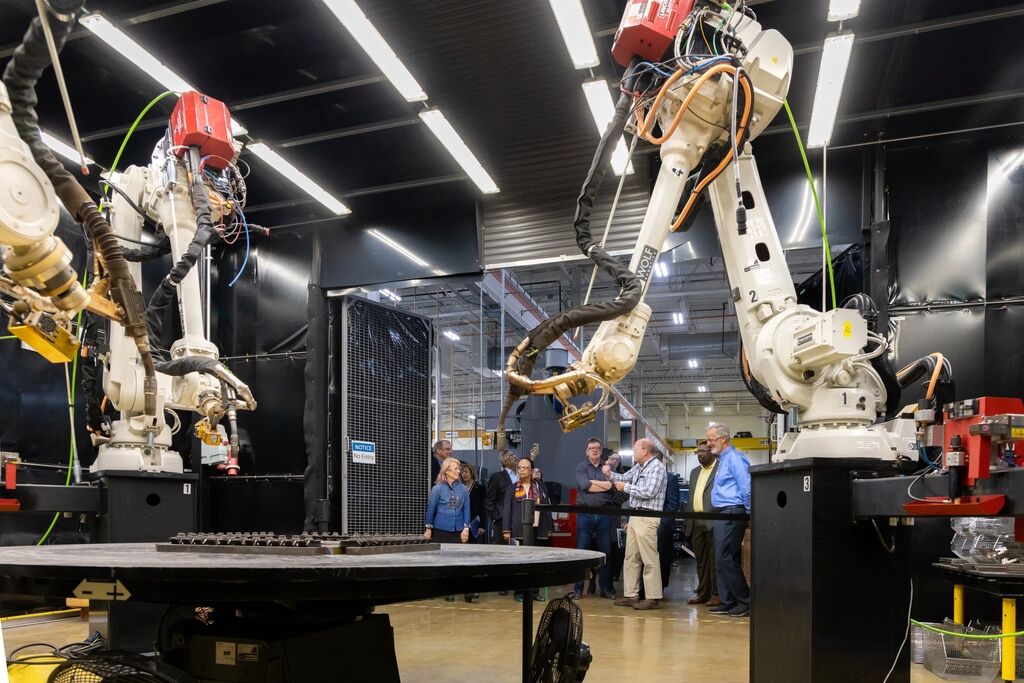
The deduction covers, among other things, the cost of buying brand-new:
- industrial robots,
- peripheral machinery and devices functionally linked to them (e.g. positioners, linear tracks, grippers and other end effectors),
- equipment ensuring safety and ergonomics at workstations where people work with robots (e.g. fences, light curtains, area scanners),
- equipment for remote monitoring, diagnostics and servicing of robots.
Software needed to start up the robots, training in their operation and lease instalments also qualify – but only for leases after which ownership of the robot passes to the company. According to the Polish Ministry of Finance, the deduction cannot exceed the company's income in a given year, and the unused part is carried forward to later years.
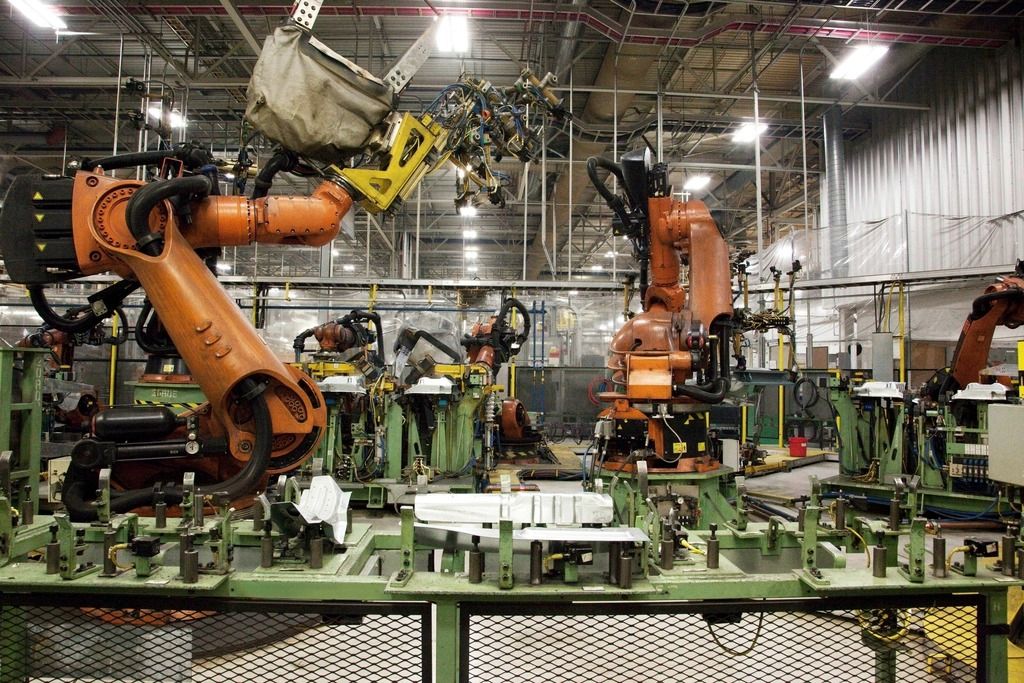
What the law treats as an industrial robot matters. It must be an automatically controlled, programmable machine with at least 3 degrees of freedom that at the same time exchanges data digitally with control devices, is connected to the company's IT systems (e.g. production management), is monitored by sensors or cameras and is integrated with other machines in the production cycle. Not every automated device meets all these conditions – and this is the most common point of dispute with the tax office.
Robotisation relief after 2026 – extended to 2036
Originally the relief covered costs incurred in 2022–2026. The Sejm passed, and on 18 November 2026 the President signed, an act amending the CIT and PIT Acts that extends the robotisation relief by 10 years – to costs incurred up to 2036, at the same deduction rate. The changes are to apply from 1 January 2027. The act also clarifies how costs are determined for robots that are depreciated – before settling, it is worth checking how the new rules affect when the relief can be used.
This is good news for companies: robotisation no longer has to be squeezed into 2026. But it is also a reason to compare the relief with the PIZ calmly before ordering robots for the coming years.
Why the PIZ usually gives a manufacturer more
The robotisation relief covers one type of spending – robots and their surroundings. Yet robotisation is rarely a stand-alone project. It usually comes with a hall extension, a new line, machining equipment, installations or a warehouse. That spending is outside the robotisation relief, but in the PIZ it is part of the eligible costs of a new investment.
Advantages of the PIZ for a manufacturer:
- Wider scope. Under a support decision, eligible costs may include buildings, machinery and equipment – robots included – and certain intangible assets. The robotisation relief covers only robots and related equipment.
- Higher rate of benefit. The PIZ aid cap equals eligible costs multiplied by the aid intensity for the region and company size – in most regions several tens of per cent of spending. Under the robotisation relief the benefit is the tax on 50% of costs, i.e. roughly 9.5% of spending at a 19% rate.
- Long period. The PIZ exemption runs for 12, 14 or 15 years (depending on location; for applications filed from 2027 the period is to be extended), and the company uses the cap as the new investment generates income.
- No robot definition to defend. In the PIZ what matters is whether the spending is part of the new investment described in the decision – not whether a given machine meets every feature of an industrial robot under tax law.
To be fair, the robotisation relief has its advantages: it requires no decision or application, does not depend on location, has no minimum investment and does not require hiring new staff. For a company buying one or two robots for an existing plant, it can be the simplest option.
A worked comparison
A medium-sized steel structures manufacturer plans a plant extension with PLN 10 million of eligible costs: a new hall, cutting and bending machines and a robotic welding cell worth PLN 2 million (robots, positioners, guarding, software, training).
PIZ: assume an aid intensity of 40%. The aid cap for the whole investment is PLN 4 million – this is how much tax the company may not have to pay during the decision period as the extended plant generates income. The welding cell is part of that investment.
The difference is clear: the robotisation relief covers one fifth of the spending and gives about 9.5% of its value, while the PIZ covers all of it and gives several tens of per cent.
The example ignores, among other things, discounting of the cap, the terms of a specific decision, minimum investment for the location and whether the equipment meets the robot definition – real amounts are calculated for each project.
What exactly can count towards the cap in the zone is described in Eligible costs in the PIZ – what counts.
Can the PIZ and the robotisation relief be combined?
Yes, with one important limitation. For the robotisation relief the CIT Act refers to a rule known from the R&D relief (Article 38eb(8) in conjunction with Article 18d(6) of the CIT Act; the PIT Act is similar). A company using a zone exemption or a support-decision exemption may deduct only those robotisation costs that it does not take into account when calculating exempt income. The same robot cannot reduce tax twice.
In practice:
- A robot within the investment covered by the decision works for exempt income and is part of the aid cap – here the benefit comes from the PIZ, and the robotisation relief usually does not apply.
- A robot used outside the decision – e.g. in another plant or for products the decision does not cover – may be claimed under the robotisation relief, against taxable income.
There are two pitfalls. First, when almost all of a company's income is exempt under the PIZ, the robotisation relief has nothing to be deducted from – it can be carried forward, but part of it may be lost. Second, which costs go into exempt income and which stay outside affects both reliefs at once. A mistake here usually surfaces only during a tax audit. How to settle exempt income is described in PIZ CIT exemption – how to calculate exempt income.
Keep in mind, too, that the robotisation relief does not cover costs that were reimbursed to the company, e.g. financed by a grant, and selling a robot before the end of depreciation means paying back the earlier deduction.
Robots in the PIZ from 2027 – an exception from new jobs
Every support decision requires creating at least one new job. The amendment to the Act on supporting new investments introduces one narrow exception from 1 January 2027: the job condition does not apply where all eligible costs of the investment are the purchase of an industrial robot meeting the statutory requirements. If the project includes anything more – a hall, other machinery, installations – a new job is still mandatory. Other conditions, including the minimum investment value and the qualitative criteria, still have to be met as before.
For companies that want to robotise production without increasing headcount, this opens a new comparison: a 50% cost deduction under the relief or a CIT/PIT exemption in the PIZ for a "robots-only" investment. The changes are described in PIZ amendment 2027 – what changes in support decisions.
The order matters
The robotisation relief has no condition about when the purchase is made – only the cost counts. The PIZ is the opposite: the investment must not start before the support decision application is filed, and the start includes, among other things, the first binding order for machinery. A company that orders robots first and only then thinks about the zone may lose the right to the exemption for that investment. More in When not to start your investment.
Remember also that a company on Estonian CIT cannot use either the robotisation relief or the PIZ exemption. See PIZ vs Estonian CIT – which is better for manufacturers, and for the R&D relief comparison – PIZ vs R&D tax relief.
How to approach the choice
If robotisation is part of a larger investment – an extension, a new line, a new product – first check whether the project fits within the PIZ, because that is where the biggest benefit lies. The robotisation relief works well for individual purchases for an existing plant and for robots used in activity not covered by the decision.
The decision on which spending to include in the PIZ and which to claim under the relief is usually made at the investment planning stage – before orders are placed. It is hard to change later, and a mistake may cost more than the relief itself.
A short answer to whether a company with a support decision can use the robotisation relief is in our FAQ – PIZ and the robotisation relief.
MSP Invest in Toruń prepares applications for a support decision in the Polish Investment Zone. If you are planning to buy robots or extend your plant, book a free consultation – we will check whether the project qualifies for the PIZ and how to plan it so that you do not lose either relief.
This article is for information only and does not replace an individual analysis of your investment.
Robotisation: PIZ, relief or both? We will check free of charge whether your robot purchase and plant extension qualify for the PIZ and how to combine the exemption with the robotisation relief.
Free consultation+48 607 826 526